
Spend Fewer AI Tokens Without Losing QualityMost of the Waste Was in My Own Setup

I kept hitting my AI limits on a $200 plan, so I went looking for the waste. Most of it was sitting in my own setup, the cheap fixes were costing me quality, and what I learned became Token Optimizer.

By Alex Greenshpun

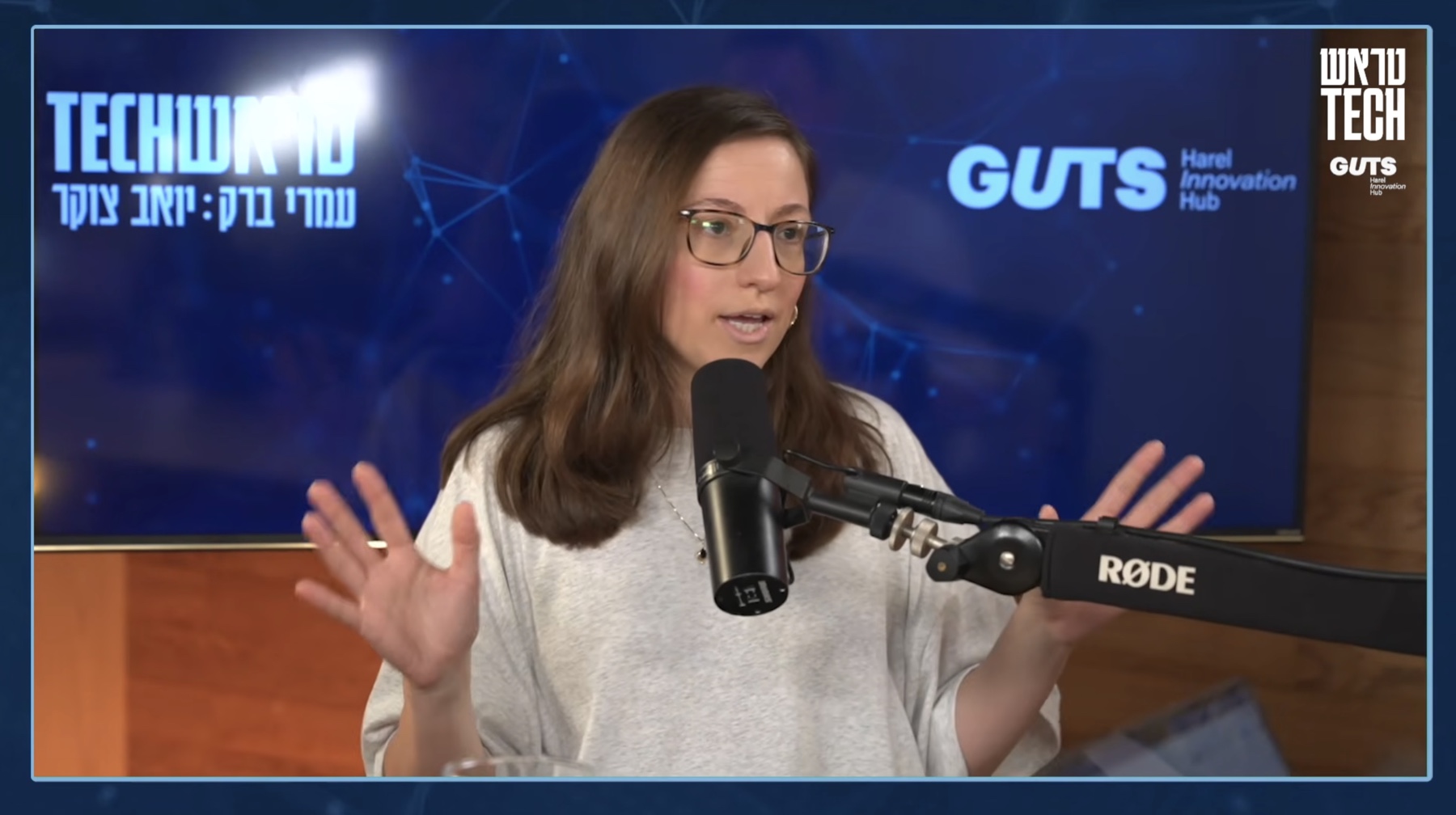
On TrashTech with Omri Barak and Yoav Zucker. Translated from Hebrew.

Last updated on

  • 9 min read
  • 6 parts
  • 6 drawings to play with
Watch on YouTube
In this essay6 parts
  1. 01I paid $200 a month and still hit the wall
  2. 02My setup was eating tokens before I typed a word
  3. 03The cheap model sends you a second bill
  4. 04Let your agent interview you
  5. 05Memory, so you never explain yourself twice
  6. 06Most things don't need to be agents
  7. ··Key moments
  8. ··Full transcript

For a while, the loudest trend in AI was token maxxing: burning through tokens, the units AI usage is counted and billed in, as if they cost nothing. The mood has flipped, and now every team wants to spend less, get more and prove the investment pays back. I always found token maxxing a bit ridiculous, and I'm pretty sure that in a few months we'll look back at it very differently.

Almost every conversation about cutting tokens is about money, though, and almost none of it is about quality. I learned the hard way that you can't separate the two. When I went looking for where my tokens were going, most of the waste turned out to be in my own setup before I'd asked for anything, and the savings that looked cheapest were often the most expensive ones. Everything I learned along the way went into Token Optimizer, an open source tool that has crossed 30K users in just a few months.

Tap upgrade. The ceiling goes up. I still hit it.

I paid $200 a month and still hit the wall

This might sound familiar to anyone with an AI subscription. My Claude Code subscription started at $20 and climbed to $100 and then to $200. Even at $200 I kept hitting the limit, because I build several projects in parallel. I'd get stuck and wait, usually for less than an hour, but still. The easy way out was to buy extra usage, which bills you API prices and gets expensive fast, so I decided to understand what was actually going on and how to cut it down.

There was a professional reason too. At 10x Company I build agents and AI systems for companies, and if I don't work with this technology properly, the costs blow up for my clients as well as for me. So I started investigating where the waste comes from, and the first answer is one you learn fast once you work with coding agents.

In the end, everything is context.

Context is everything you feed your agent: the knowledge and information it needs so it can act in the world for you. You're building its world for it, and the classic rule applies, garbage in, garbage out. So when you want to spend fewer tokens, context is the first place to look.

Tap a pile to trim it. Your task gets the room back.

My setup was eating tokens before I typed a word

I didn't plan to build my own tool. I looked at what was out there first, hoping to find something that would save a bit here and a bit there, and I noticed that none of it looked at the actual quality of the work. When savings come at the expense of output quality, the savings are an illusion, because you'll spend five times more fixing the mistakes. So I jumped in and started with what was happening on my own machine, and the first leaks were sitting right in my personal setup.

Skills were the first one. A skill is packaged expertise, a set of instructions your agent picks up when a task needs it, and I love them. The catch is that each installed skill's description loads into the context window, the agent's working memory for the session. One skill with a 100-token description might be perfectly fine. Fifty or sixty of them, let alone 200, and you're burning thousands of tokens for nothing, every single session.

Connectors work the same way. MCP connectors are the plugs that hook your agent up to your other apps, and each one brings its own list of tools, so every tool adds another description the model has to read.

You pay for all of this before you've asked your agent for anything. Cleaning it up was the very first thing Token Optimizer did, and that first version saved me about 40,000 tokens on every session.

Pick a task. On easy jobs the cheap model wins. On hard ones it pays three times.

The cheap model sends you a second bill

The second lesson bothered me even more. Most advice for saving tokens is to hand the task to a cheaper model. So instead of asking Opus to do my research, I ask Sonnet, because Sonnet costs less, and on paper I've saved. But if the research comes back weaker than what Opus would have given me, I end up doing the work again, and the saving disappears.

If I'm now doing the work twice because the output wasn't good enough, I've wasted two times, three times more tokens.

Quality mattered to me in everything I built for exactly this reason. Matching each task to the right model is a real skill (it's the problem I built Outsourcerer to solve), and a saving only counts when the work still holds up.

Token Optimizer follows the same principle, and you don't need to be technical to use it. If you work with coding agents, you hand it the link and say, "Hey, install this thing for me." It then offers to audit your setup, from your connectors and skills to your memory and CLAUDE.md or AGENTS.md (the instructions file your agent reads every session), and shows you exactly where you're wasting, something like "you have 50 skills here and you actually use 10." Nothing changes until you approve it.

But the audit is just the beginning. Token Optimizer works in the background and compresses your context so fewer tokens go out each time, only where quality doesn't suffer. And nothing is lost, because the agent can instantly recover any compressed context when it needs it. Session continuity is built in too, so your agent remembers your sessions, the tool call results, the big decisions and every important piece of context. You can always start fresh without losing anything: open a new session after a coffee break, say "a moment ago we worked on this, let's continue," and pick up right where you were.

I don't collect any data, and I like it that way, because I built it to give something back. So the only numbers I can show you are mine: in the last 30 days it saved me almost 2,000 dollars, and at that point it had at least 8,000 or 9,000 installs. That's one person's savings, on a tool that runs on thousands of computers.

Tap answer. Every answer becomes a file in your agent's brain.

Let your agent interview you

Cleaning up waste is one half of the job, and the other half is giving your agent good context from the start, which matters far more than prompts. Please don't pay anyone to teach you how to write a prompt, because Claude will happily write one for you. Your time is better spent building your agent its brain.

There's a huge amount of hype around agents right now. "We run 20 agents that work while we sleep." Great. Nice. Cool. For most people that sounds like something they could never do, and the truth is it really isn't that scary. An agent is basically a folder. Inside it are what we at 10x call building blocks, and one of them is knowledge, the "what" of your world. When I manage a client, for example, that client gets a subfolder with files on who they are, summaries of our calls, what's on the table right now and which tasks are still open.

When I built my own brain, my personal OS, I deliberately didn't copy one of the many frameworks out there. I learned long ago that copy-paste in this world doesn't give good results, because you end up with a structure built around someone else's way of working, and it starts messing things up for you. So I had the agent build it with me. I told it, "You'll help me build this folder, which will be your brain. Ask me questions, pull every piece of information you can out of me, and tell me where you think there's a gap." It's one of the biggest tips I can give anyone, because it gets the knowledge sitting in your head out and into the work.

And every time you're missing something, ask me a question. Don't guess.

Once the brain exists, you work inside it. Open Claude Code in that folder and it already knows who you are, what you discussed with each client and which tasks are open. Ask for a landing page for a client and it goes straight to their folder, finds their branding assets and builds the page the way it should be, with no explaining from scratch, and every explanation you don't have to type is tokens you don't spend.

Skills make the brain stronger still. They are the packaged expertise, the methodologies that, in effect, become the operational memory of your agent's brain. My deep research skill, for example, sends out up to about 17 sub-agents, each responsible for a different slice of the research. One reads and analyzes YouTube transcripts, and another has a single job, checking that every source the others brought back is real and accurate.

Tap next session. Without memory, you explain it again. And again.

Memory, so you never explain yourself twice

The brain folder has its weaknesses. Your agent only knows it while you're working inside it, and someone has to keep it up to date and make sure the relevant information sits at the top. With time you become the maintainer of your own knowledge and memory, or of the setup you built to maintain that layer. Lessons you teach along the way are even more fragile. You correct your agent, you even tell it "never do that again," and maybe it wrote that down somewhere and maybe it didn't, so the same mistake comes back.

I built Total Recall for exactly that. It's automated, proactive memory, the kind where your agent remembers without you having to work at making it remember. With it, I open a completely empty session, without even opening the project folder, and say something like, "Remember the landing page we built for the client at company A, all the corrections I gave you and every bug we hit putting it live? Build me exactly one like that for client B, and this time make it work." And it does. It runs locally, only on your computer, and it reads your session history in a way that saves up to 97% of tokens compared with markdown-based memory. And it's the same brain for all your agents, so Codex and Devin remember what Claude decided and why, and Hermes remembers which projects are running and how far along they are.

Pick a problem and see where it lands. Most land on a skill or a timer.

Most things don't need to be agents

If you're just starting with Claude Code and hitting walls, my first tip sounds almost too simple: ask it. People forget this all the time. You don't need to google how something works, you can ask Claude Code, "If I want to do this and this with you, how do I do it?" And make it ask you questions, always.

My second tip is to start from the problem. Look at what hurts and what bugs you in your day, and build for that. Most of it won't need an agent. The word "agent" scares people right now, and most of the beautiful automations you see online turn out to be a skill, or an automation that runs on a schedule and moves one thing, which moves something else.

Most things don't need to be agents. So first of all, remember that. Sometimes, and most of the time, a high-quality skill is enough for you.

Token Optimizer started exactly that way. I had one annoying problem, my limits, so I cleaned up my setup and wrote a skill that could do the cleanup for me. The skill grew into a whole platform, and the cleanup is now just one of the things it does.

Key moments

  1. 28:17My Claude Code plan climbed from $20 to $100 to $200, so I built Token Optimizer and put it on my GitHub for everyone.
  2. 29:04All the waste traces back to one thing, context.
  3. 29:46Token minimizing talk is all money and no quality, and a cheaper model can cost more.
  4. 33:10Have your agent interview you to build its brain, instead of copying someone's framework.
  5. 36:55Skill descriptions and connectors were the hidden leak, and the first cleanup saved about 40,000 tokens a session.
  6. 41:57Total Recall lets an empty session rebuild past work, corrections and bugs included.
  7. 46:01Start from the problem, and remember most things don't need to be agents.

Alex Greenshpun is an AI strategist and builder and co-founder of 10x Company. She builds Total Recall, Token Optimizer and Outsourcerer.


Read the full conversation, translated to English

Translated from Hebrew YouTube auto-captions. The captions carry no speaker names, only ">>" at a speaker change, so lines are labelled Host unless the conversation names the speaker (Alex addresses Yoav by name at 32:26). Timestamps are the start of the caption chunk where each paragraph begins. Filler and false starts are removed. Anything the captions do not make certain is marked [unclear].

---

27:38Host The industry is sobering up. We were in unlimited token spending, token maxxing, and now we want to optimize it, cut it down, get more for less. And show ROI, show how the investment pays back, token minimizing. In the last episode you promised me you'd bring someone to talk us through how to do token minimizing. You promised and didn't deliver.

27:57Host You've got a point. [laughter] Alex Greenshpun is co-founder of 10x Company, an AI consulting and implementation company. So great that you're joining us.

Alex: Thank you so much. So great to be here.

28:17Host You told us about all sorts of things, among them tools you built that are now open source, that anyone can use, for managing tokens more smartly.

Alex: Right. It's a specific tool called Token Optimizer, and it's available to everyone on my GitHub. I built it because of a problem I ran into. I'm not a company, I'm not an organization, and I have a subscription that started at 20 dollars, then 100 dollars, then 200 dollars for Claude Code.

28:42Host The moment you felt you were walking into a casino, you said, "Wait, let's hold our horses and do something about this."

Alex: Exactly. I said, no, wait, this doesn't make sense. I need to understand what's going on here and how I can cut it down. By the way, I find this token maxxing trend so ridiculous. I'm pretty sure that in maybe three months, half a year, we'll look back at it [unclear].

29:04Host We talked about it and thought it would be chosen as word of the year, and a few weeks later we now think token minimizing will be the word of the year.

Alex: I looked at my own work and said, I work with agents, I build agents, I build systems for companies and organizations. I have to make sure I'm working with this thing properly so that it doesn't blow up in costs. So I started investigating where all this waste comes from. The first thing I understood is that it's all context. And that's something you learn very quickly once you start working with things like Claude Code or Codex. In the end, everything is context.

29:24Host Explain context in two sentences for anyone who doesn't know it.

Alex: Broadly, garbage in, garbage out. Classic. But context, broadly, is what we feed our agent. The knowledge, the information it has, so that with that information it can act in the world. We're really building its world for it so it can help us.

29:46Host And the more precise and narrow the context is, the more it touches specifically what we want, the better the outputs we get from our agents.

Alex: Totally. Totally. And that's a great point, because most of the time we talk about token maxxing, token minimizing, we only talk about the money and we don't talk about the quality. That really bothered me too, because I noticed it. So, say, I'll give this specific task to a weaker model. I won't ask Opus to do research for me, I'll ask Sonnet. Sonnet costs less than Opus, so I saved. But the output I got isn't as good as what I would have got from Opus. So there are all sorts of things we need to take into account at the level of quality as well.

30:29Host So what's most important when working with agents? The prompts? Today you can pay tens or hundreds of dollars for someone to teach you to write a prompt. Right? Is that the important thing?

30:49Alex No, don't pay [unclear: possibly "more than a hundred"] dollars to anyone. You can just go into Claude and ask it to write prompts for you. Today the best way to work with agents is first of all to build them context. First build them the brain your agent works out of. Because in the end, what is an agent? There's a huge amount of hype around agents. "We run 20 agents that work while we sleep." Great. Nice. Cool. For regular people, day to day, that sounds a bit like, wow, I could never do that. The truth is it really isn't that scary.

31:14Host It's a text file, in the end. I have to say, you came into our room before we went into the studio, you'd come from the train, the laptop was closed, and then you said, "Wait, wait, wait, I have to open it, it needs to work."

Alex: Yes, I get stressed that they're not working right now.

31:40Host So wait, you said a folder that's full of what, exactly? Each agent is a folder like that, and in it you have...

Alex: Each agent is a folder, and in it there are what we at 10x call building blocks, foundation stones. One of them is the knowledge, the "what" of my world. For example, I run a company, I have clients, that's all the "what" of my world, right? So I need a file on...

Host: Maybe a really concrete example.

32:04Alex For example, I have a company where I manage a client and build systems for them. I need a number of files that explain to me who the client is. Maybe summaries of transcripts of conversations we've had, what's on the table right now, what open tasks there are, right? Every one of those things can be a file inside a subfolder for that client.

32:26Yoav Zucker Do you upload everything, or do you also ask Claude, say, to ask you more questions so it knows what's missing, what else you need to add so your agent knows more?

Alex: Yes. That's a great point, Yoav. When I first built this system, before I worked with agents the way I do now, where I'm a bit in FOMO that they're not running and I have to open the laptop, I built my initial folder for the brain, or the personal OS, whatever you want to call it, my own operating system. And my way of doing it was deliberately not to go to some existing framework. There are loads of them, but I learned long ago that copy-paste in this world doesn't give good results.

33:10Host Meaning?

Alex: There are a lot of frameworks you can come along and take and say, hey, here's a folder organized a certain way, with this logic, make one like it just for me. In the end you copy something that doesn't really fit you, and then it'll start messing things up for you.

Host: Right.

Alex: Tell your agent to ask you questions. Tell it, "Hey, I've come to make a folder like this that will be your brain. You'll help me build it and you'll ask me questions. You'll try to pull every piece of information you can out of me, and tell me if there's something you think is a gap. Ask another question, until we have this thing."

33:36Host Do you talk to the agents in Hebrew or in English?

Alex: I speak English with all of them.

Host: Even if your clients here speak Hebrew, and the folders or the context you put in are in Hebrew, your dialogue with it is in English?

33:59Alex In our case we mostly work with [unclear: likely "tech companies" or "startups"] that work in English day to day anyway, companies aimed at the international market. But you can absolutely do it in Hebrew too, if someone prefers Hebrew.

Host: Yes, it's annoying that it goes left to right and not right to left.

Alex: What's more annoying is that Hebrew costs you more tokens.

34:18Host In a second we'll get to token savings in depth. But okay, say we've built the context. You explained what we need to do, ask ourselves questions and build our brain. What's the next step?

Alex: The next step: once you have a folder like this, don't look at it as a finished product, "that's it, I'm done." You actually start working inside this folder. Every time you open, say, your [unclear: likely "Cowork"] or Claude Code, you open it in this folder, and it already knows your world. It already knows who you are, it knows you talked about such and such and about this client, and here there's an open task. So you'll already feel you don't need to explain yourself from scratch. And by the way, that will save you a lot more tokens too.

34:58Alex Because when you ask it, for example, make me a landing page for such-and-such client, it already knows to look in that client's folder, it already knows what branding assets they have, and it'll do it exactly as needed without you explaining now. Add skills on top of that, which is the critical part here. Skills are basically expertise in a package, in a box. I really love them.

35:25Host Inside this folder?

Alex: Not inside this folder, but...

Host: It can play across different folders.

Alex: Yes. You can install global skills in your settings in Claude, or you can have a skill that lives only inside the specific folder.

Host: An example of a skill you use a lot.

35:43Alex Wow. Okay, a skill I use a lot. For example, I have a skill called deep research. I don't use regular deep research anymore, ever, because I built a system that dispatches up to about 17 different sub-agents, where each sub-agent is responsible for a different piece of content. There's an agent responsible for YouTube information, and it looks at YouTube transcripts, for example, and can analyze them for me. There's one responsible purely for checking that the sources the other agents brought are real and accurate.

36:07Host How do I become more efficient? How do I waste less and do more?

Alex: Great. That's an important question, and I don't think there's anyone working with agents today who doesn't ask it. When I built Token Optimizer, that was exactly the question I had, and I started investigating why I was wasting so many tokens. Part of what I discovered is, first of all, that my context, and everything I do with the context, has to be high quality. Because in the end, if I'm now doing the work twice because the output wasn't good enough, I've wasted two times, three times more tokens. So quality was very important to me.

36:55Alex I also looked at other tools, because I didn't set out to build everything myself. I looked at other tools and said, maybe I'll use something that saves here, saves there. I saw that nobody looks at quality, and I said, okay, I'll jump into the water and look at what's happening on my side. And the first things I saw were in my own personal setup. For example the skills we talked about, right? Each skill like that, its description basically loads into the context window. When there's one with a 100-token description, that's perfectly fine. But when you have 200 skills, or even 50, 60, that's already thousands of tokens wasted for nothing.

37:20Alex So that's one. There are other things too, like different connections. We have MCP, if you know it, different connectors, right? So if we connect a lot of connectors, those connectors also have all sorts of tools, and every one of those is another description, another thing that wastes the model's tokens. And that alone, when I did the initial cleanup, just in the first version of my Token Optimizer, saved me, if I remember correctly, about 40,000 tokens on every single session.

37:44Host By the way, at the peak, what amounts did you reach in spending?

37:44Alex I don't work on the API at all, so the whole time I worked on a subscription.

38:09Host But you got to 200 dollars, you hit the cap, and then you understood.

Alex: That's it. I got to 200 dollars, but I kept getting stuck at some point on limits, because I build several projects in parallel and it really...

Host: You'd wait a few hours?

38:30Alex I'd wait, usually not more than an hour. I mean, 200 dollars is relatively flexible, but still, I'd wait and I'd get stuck. And what I looked at, I also saw that in the end I didn't want to buy extra usage now, I mean pay extra.

Host: Right.

Alex: I looked at what I was already doing and learned that my whole setup was very wasteful. So I cleaned it up, and then I said, wait, I'll build a skill that knows how to clean this setup. And from that skill it became a whole platform, where that's just one of the things it does.

38:56Host There's also a piece of context we haven't said in this whole conversation, which is that Alex isn't a programmer. She has no programming knowledge, she comes from a marketing background.

Alex: Yes.

Host: Which is amazing, that you built all these things. So let's get specific about what you built and how others can use it too. You talked about Token Optimizer and about Total...

39:16Alex I haven't talked about Total Recall yet, you're doing spoilers. But fine, we'll talk about that too. I'll explain briefly that Token Optimizer does live on GitHub, but non-technical people can use it too. As long as you use something like Codex or Claude Code, you can just bring its link to your Claude and say, "Hey, install this thing for me." And it runs in the background and works for you and saves. It has a few automations it runs in the background, plus it has this skill, token-optimizer, that's what it's called.

39:38Host So wait, if I want to install it now, I go to GitHub, tell Claude Code to install this thing, and from that moment what actually happens?

39:57Alex From that moment it'll offer to run the initial optimization, which is basically a check of your setup and how you've been working.

Host: It'll go through all my folders and everything I've done so far?

Alex: It'll go through the critical things, like MCP connections, like CLAUDE.md, the memory, all sorts of things like skills, and tell you exactly where you're wasting too much. And it won't change anything until you approve it. It'll tell you, listen, you have 50 skills here, you actually use 10 of them, maybe we [unclear: likely "archive"] these skills that are wasting tokens for you.

40:23Host Just the fact that they're sitting there already wastes tokens? Even if I don't use them, just being there takes tokens?

Host: Okay, so the first time it really does the initial cleanup, and then what?

Alex: It does the initial cleanup, and in parallel it does work in the background that saves, where it's needed and where it doesn't hurt quality. It does a kind of compression of the context, so fewer tokens are actually sent each time.

40:45Alex And then also, when you run a long session, we talked about sessions that run too long, and you want to go make a coffee, you don't need to worry anymore, because you can always start a new session right after. Without asking it for some prompt to summarize the previous session, you just tell it, "Hey, a moment ago we worked on a session about such and such, let's continue," and it just knows.

41:11Host It just knows.

Alex: It sees it because it has a database.

Host: And if it wasn't a moment ago, if it was a week ago, same thing?

Alex: In the optimizer's case it keeps it for you for up to a few days, simply because it's meant to be continuity between sessions.

Host: If you want memory, that's another topic.

Alex: That's another tool already, and it'll also be available soon. It'll actually be much simpler, because it doesn't need installing through GitHub. It's called Total Recall.

41:35Host And what does it do?

Alex: It's real memory, that lets your agent actually remember without you having to work to make it remember. Because what happens today? You have this brain folder we talked about, right? You have a folder that tells it who you are, who the podcast is, who the content creators are, what topics interest your audience. That's wonderful. But if you're not inside that folder when you're working with the agent, it doesn't really remember it.

41:57Alex And if you went through some process and corrected the agent, and even told it "never do that again," maybe it wrote that down somewhere, and maybe it didn't, and it'll repeat those mistakes. With Total Recall I now work differently. I just go into a completely empty session and say something like, "Hey, remember how we built that landing page for the client at company A? Remember all the corrections I gave you and all the bugs we ran into when we tried to put it live? Build me exactly one like that, but this time one that works and is high quality, for client B." And I give it a bit of [unclear].

42:46Host All of that through a new chat, because it remembers.

Alex: A new chat, totally. I didn't even open the project folder, and because I have Recall it just...

Host: It's internal, inside the computer, inside the system?

Alex: Yes, it's local. Meaning it runs only on your computer. It looks at the history of your sessions, but in a way that also saves you tokens.

43:07Host Two questions to finish. One: how much money have you already saved in tokens [laughter], for companies, can you say?

Alex: For companies, no. I can say that at this stage there have been, I think, at least 8,000 or 9,000 installs of Token Optimizer.

Host: And can you already say how much money it's saved?

Alex: I don't collect data, that's what's nice about it. I really just wanted to give.

43:33Host Because we talked here about [unclear] the guy from Netflix who set this up, who could say that he released it and saved hundreds of thousands of dollars. He opened it as open source for everyone and really saved money and helped the industry save money.

Alex: I can only show you mine, just mine.

Host: The screenshot of how much it saved you in the last month. In the last 30 days, the one you sent us, it came to 2,000 dollars.

43:52Alex Yes, almost 2,000 dollars. I'm sure I've already passed that by now. And that's only me, and it runs on thousands of computers, so I assume a lot more.

44:13Host People listening to us, people who aren't necessarily exactly like you, without a programming background, but who really want to take the first step with Claude Code, who tried a bit but hit walls, and everyone knows you hit quite a few walls and a lot of difficulties when you try this. What's one tip you give people for getting past it? Because there really is a return on investment once you use it properly.

Alex: Totally. So first of all, just remember that you can ask any question you have. You can simply ask it. It's surprising, but I also run workshops and courses, and it's one of the things people somehow forget.

44:35Alex They don't have to google something now and ask how to work with it. You can just ask Claude Code, "Wait, if I want to do this and this and this with you, how do I do it?" And one more very, very important thing: make it always ask you questions. That's one of the biggest tips I can give you, because that way you'll be able to express much, much more of the information sitting in your head, which is critical for the success of your work.

44:58Host So how do you do that, what goes in the prompt at the start?

Host: You see what she did? She turned you into Claude, she got you to ask more questions. That's our job here, isn't it?

Alex: Exactly. So you open a session and you tell it, for example...

Host: If something's unclear, ask me.

45:18Alex Yes. For example, you're doing something, or say you came to open a session and build this brain of yours. So you tell it, "Hey, I want to build a brain like this, but I want one that fits me and the way I work. I have a few files here, but I don't know how to do it. So ask me questions, whatever you need. Check with me what information is missing, and then build it for me." Okay?

45:42Alex "And every time you're missing something, ask me a question. Don't guess."

Host: One more question, since you've already brought it in: how do I even know which agents I need? What are the best agents for me? Which agents can replace part of my work at all?

45:42Host I'll answer you, we say this a lot. You first need to say what your problem is, okay? What's the problem? And then look for the solution. Because everything is so broad, you can get agents for anything. If you want to make something for content, go at it that way. If you want to build an automation for, I don't know, building budgets or sending invoices or booking meetings or filling in forms, then build yourself that agent.

46:01Alex Right. First of all, really start from the problem. Start by seeing what hurts, what bugs you. And also, not everything needs to be an agent. That's something really, really critical to understand. The word "agent" really scares people right now, in my opinion. And most of the things you see doing those beautiful automations aren't really agents. Most of them are either a skill, or an automation that runs on a schedule and moves something, which moves something else.

46:27Alex Most things don't need to be agents. So first of all, remember that. Sometimes, and most of the time, a high-quality skill is enough for you.

46:52Host Fascinating, Alex.

Alex: Yes? Did you come out confused?

Host: Not really. But I hope first of all you'll give us the link to Token Optimizer so we can put it in the show notes, and anyone who wants can just ask Claude or Codex to install it. And thanks for all the tips, really, thank you.

47:15Alex Thank you so much.

Host: Thanks.

(Segment ends. The hosts move on to "Top or Flop".)

The conversation was in Hebrew. This essay and the transcript are an English adaptation, edited for reading.

More conversations